Excavator Engine No-Start Diagnosis: 7 Steps to Fix
Why Excavators Refuse to Start
A dead excavator on the job site is lost money by the hour. Before you call a tow or replace an entire engine, run a structured no-start diagnosis. Most no-crank or no-start faults trace back to the battery, starter, fuel delivery, or the engine control module — not the block itself. This guide walks through seven field-tested steps that work across CAT, Komatsu, Volvo, JCB, Kubota, Yanmar, and Cummins platforms, and points you to the exact replacement part numbers we stock.
Safety first: disconnect the negative battery terminal, keep sparks away from the fuel system, and never bridge solenoid terminals with uninsulated tools. If you are unsure, stop and message our team on WhatsApp for a guided check.
Step 1 — Verify Battery Voltage and Cranking Power
A healthy 24 V system should hold above 22 V while cranking. Drop below 18 V and the starter solenoid may click but never engage. Measure directly on the battery posts with a multimeter — not the clamps, which hide corrosion. Weak cells and corroded terminals are the most common culprits on machines left idle through winter. Clean the posts, load-test the battery, and only move on once voltage is confirmed.
Step 2 — Test the Starter Motor and Solenoid
If you hear a single click with no crank, the solenoid or starter motor is suspect. Bridge the solenoid terminals briefly with an insulated wrench: if the engine turns, the solenoid is dead; if it stays silent, the starter motor or ground cable has failed. Starters pull very high current, so a poor chassis ground often mimics a bad starter. Always check the ground strap before ordering parts.
Step 3 — Confirm Fuel Supply and Priming
A diesel no-start right after a filter change almost always means air in the lines. Crack the bleed screw at the fuel filter, pump the primer until fuel runs bubble-free, then re-tighten. A clogged pre-filter or collapsed fuel line also starves the injectors. If the lift pump does not build pressure, the cause is upstream — tank, line, or pump — not the injectors themselves.
Step 4 — Check the Engine Control Module (ECM / ECU)
Modern excavators will not inject fuel without a healthy ECM. A water-damaged or poorly grounded CAT control unit can kill injection while the dash still lights up. If cranking is strong, fuel is present, yet there is no smoke from the exhaust, suspect the module. We carry the Caterpillar engine ECU / controller 331-7539 for C4.4, C6.4 and C6.6 engines — confirm your serial before order.
Step 5 — Inspect the Fuel Injectors
No start with white exhaust smoke points to injectors that will not fire. A failed unit injector on a CAT C7 simply will not atomize fuel. Test rail pressure and individual return flow; a high return rate means a stuck or burnt injector. Replace in sets where possible. Our CAT C7 fuel injectors 387-9427 and 10R-7225 are matched to the E320D / E330D families and ship with test data.
Step 6 — Compression and Mechanical Integrity
If electrical and fuel check out but the engine still will not fire, you are looking at compression loss. A broken crankshaft, burnt valve, or cracked head ends the job. For JCB 4.4 engines the crankshaft 320/09256 is a known wear item; Kubota D1503 heads use the cylinder head 1A013-03043; Cummins 6BT blocks reference the cylinder block 3928797; and Yanmar 4TNV98 / 4TNV98T engines are available as complete assemblies. A wet compression test tells you which cylinder is leaking before you tear down.
Step 7 — Verify Sensors and Wiring
Crank and cam sensors, the RPM sensor, and the stop solenoid all gate injection. A single open circuit or a chewed rodent wire can disable starting with no fault light. Trace the engine harness, wiggle-test connectors, and scan for active codes. The ECM will not command injection without a valid engine-speed signal.
Quick Decision Table — What to Replace
|
Symptom |
Likely fault |
Part to order |
|
Clicks, no crank |
Solenoid / starter |
Starter motor + solenoid |
|
Cranks, no smoke |
ECM / injectors |
|
|
Cranks, white smoke |
Injectors not firing |
|
|
Weak crank |
Battery / ground |
Battery + ground strap |
|
No compression |
Mechanical |
Frequently Asked Questions
Q1: Can a bad ECM cause a no-start with dash lights on?
Yes. The ECM controls injection timing. If it loses power or ground, the engine cranks but never fires. Confirm with a scan tool reading live RPM and rail pressure before replacing injectors.
Q2: Should I replace one injector or the whole set?
On engines past mid-life, replacing a single failed injector often exposes the next weak one within months. For CAT C7 we recommend matched sets of 387-9427 / 10R-7225 to restore balanced power and avoid repeat labor.
Q3: Why does my excavator start fine in summer but not in winter?
Cold thickens diesel and weakens batteries. Below 18 V cranking, the starter cannot overcome compression. Pre-heat, a fresh battery, and winter-grade fuel usually resolve it.
Conclusion — Get the Right Part, Fast
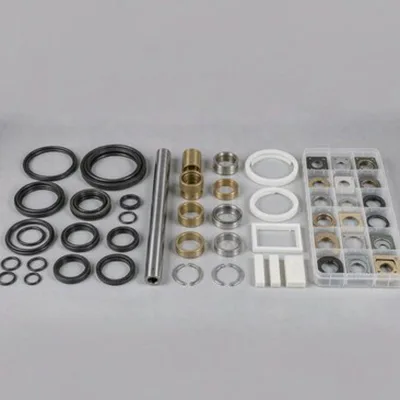
A disciplined no-start diagnosis saves you from an unnecessary engine swap. Once you have isolated the fault, send us your machine model and the part number. Our CAT ECM 331-7539, injectors 387-9427 / 10R-7225, and full engine kits such as the C9.3B overhaul repair kit are in stock for a same-day quote. For Volvo EC-series machines we also supply the Volvo D6D liner kit. Message us on WhatsApp or request a quote and our team replies within 4 hours.