Volvo Excavator ECU Faults: Diagnose and Fix Electrical
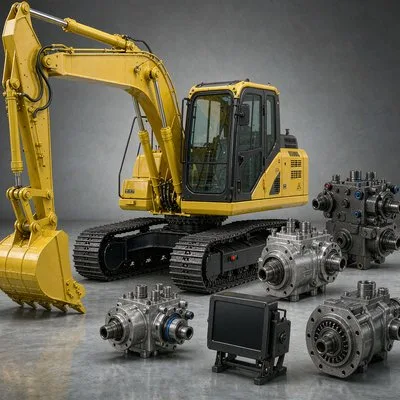
Volvo EC-series excavators are dependable machines, but when an electrical fault appears the symptoms are vague: the engine will not crank, the monitor stays dark, the machine derates for no visible reason, or gauges flicker while the engine runs. Most of these faults are diagnosed incorrectly because owners replace the wrong layer of the system. This guide walks through the four layers of the Volvo EC electrical system, maps the most common symptoms to their likely causes, and gives a six-step diagnosis sequence - with real VOE part numbers for the parts that actually fail.
How the EC Electrical System Is Layered
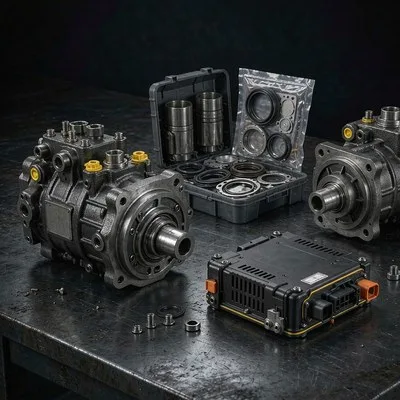
Think of the electrical system as four layers. At the top sit the control units: the machine ECU and the VECU-type controllers that manage engine and hydraulics. Below them is the operator interface - the controller panel and the display cluster. The third layer is the wiring: harnesses, connectors, relays and fuse boxes. The bottom layer is the field devices: sensors, switches, throttle motors and solenoids. Because the B-series and C-series machines use different control architectures, a control unit from one generation will not simply bolt into the other. Every replacement must match the part number on the original unit, for example the
or the
ECU controller 20824172 / VOE20824172 / 10555535 for the EC140B
. Multi-function machines also use
alongside the main ECU, so identify which unit has failed before ordering.
Symptom-to-Cause Quick Reference
|
Symptom |
Likely cause |
First check |
|
Cranks but no start, no codes |
ECU power, ground or crank signal |
Main relay, fuses, ECU supply connector |
|
Random derate or shutdown |
Harness connector corrosion |
Wiggle test at the ECU connector while running |
|
Monitor blank, engine runs |
Cluster power or backlight |
Cluster supply fuse and connector |
|
Gauge needle jumps, lamps flicker |
Sender or sensor ground fault |
Clean and re-torque ground points |
|
Throttle unresponsive, rough idle |
Throttle motor or pedal sensor |
Throttle motor linkage and connector |
|
Errors after battery replacement |
Low-voltage damage to electronics |
Verify 12.6 V static, 14 V charging |
ECU and Controller Faults
A failing ECU usually shows one of three patterns: complete no-start with no crank, intermittent derate under load, or stored communication codes between the ECU and the display. Before condemning the unit, check its supply and ground - a large share of "dead ECU" cases are a corroded ground strap or a blown supply fuse. If the unit itself has failed, replace it with an exact-number match. A used ECU fitted "because it looks the same" may carry different software and will either refuse to start or throw communication faults after a few minutes. Our team verifies the number against the machine serial before shipping any control unit, including the
and
ECU controller 20824172 / VOE20824172 / 10555535 for the EC140B
ranges.
Monitor and Gauge Cluster Faults
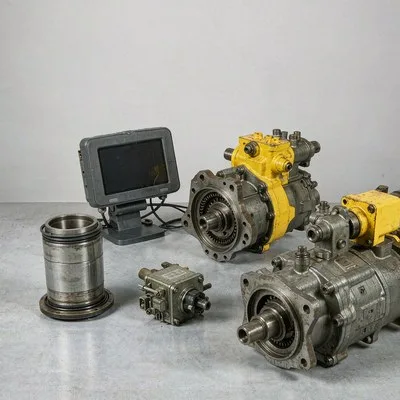
Display problems are the most common electrical complaint on working machines. A blank screen with the engine running points to cluster power or backlight failure rather than the ECU; flickering gauges usually trace to a poor sender ground; and a cluster that shows parameters in the wrong language or wrong units has simply been swapped from a different market machine. Compact EC-class machines use dedicated display panels, and we supply the
monitor display panels for the EC55C, EC60C, EC80D and ECR88
plus the
for the dash. Where the fault sits in the panel switches rather than the display, the
range covers the control-side units. Quote the model and serial and we will confirm which cluster variant your machine uses.
Harness, Connector and Relay Checks
Roughly four out of five "ECU faults" turn out to be wiring. On machines that work in dust and water, connector pins corrode, harness chafes against the boom bracket, and ground points lose contact. Start with a visual inspection of the ECU and battery connectors, then run a wiggle test while a second person watches the display. ECU-driven hard-start cases are worth a fuel-system cross-check as well: if the ECU commands the fuel shutoff correctly but the engine still will not pull, inspect the
fuel injection pump for the EC210
and the wider
range before replacing electronics. Relays, sensors, switches and replacement harness sections are stocked in the
.
Six-Step Diagnosis Sequence
· C
· R
· C
· W
· U
· R
Replace or Repair?
Harnesses, relays, sensors and throttle motors are replace-on-failure items - repair splicers rarely last in a vibrating cab environment. Control units and clusters are different: always replace with an exact-number unit rather than attempting board-level repair, because a repaired ECU with mismatched software becomes an intermittent fault that is far more expensive to find than the original failure.
Q: Can I fit a used ECU from another EC210B?
A: Only if the part number matches exactly and the software is compatible. Even then, have the unit verified against your serial number first - a non-matching ECU usually no-starts or throws communication faults within minutes.
Q: My monitor is blank but the engine starts - is the ECU dead?
A: Unlikely. A blank display with a running engine almost always points to cluster power, backlight or connector failure. Check the supply fuse and connector before touching the ECU.
Q: How do I know which display cluster fits my compact EC machine?
A: Compact models such as the EC55C, EC60C, EC80D and ECR88 use dedicated display panels. Send us the model and serial number and we will confirm the exact cluster variant before you order.
Electrical diagnosis comes down to working the layers in order - power, communication, harness, then the device itself. Send your model code, serial number, stored fault codes and a photo of the part number on the failed unit to our team on WhatsApp at +86 18758866446, or request a quote through the contact page, and we will confirm the correct part and price within four working hours.