1. Symptom-to-Cause Map
|
Symptom |
Most Likely Cause |
|
Slow arm/boom but engine sounds healthy |
Pump pressure drop or relief-valve bypass |
|
Weak only under load |
Cylinder seal bypass or contaminated oil |
|
Whole machine sluggish + black smoke |
Engine low power (injectors / ECM) |
|
Hydraulic oil hot and foamy |
Aeration, low level, or relief valve stuck open |
|
Erratic, jerky movement |
Control-valve spool sticking from contamination |
2. Step 1 — Rule Out the Engine
The pump only delivers what the engine gives it. If the machine is sluggish under load with black smoke, the fault is upstream. Start with the fuel and air side: worn Cat C7/C7.1 injectors (387-9427 / 10R-7225
) or a mismatched Cat C4.4–C6.6 ECM calibration (331-7539
) cut engine output and starve the pump. On Cummins 6BT platforms, a failing fuel shutoff solenoid (3928797
) or a clogged JCB fuel filter head (320/09256
) produces the same low-power symptom. For Kubota D1503/D1703 engines, a cracked cylinder head (1A013-03043
) or a tired C9.3B overhaul kit
reduces compression and torque. Confirm engine rpm and boost before touching hydraulics.
3. Step 2 — Pressure-Test the Pump
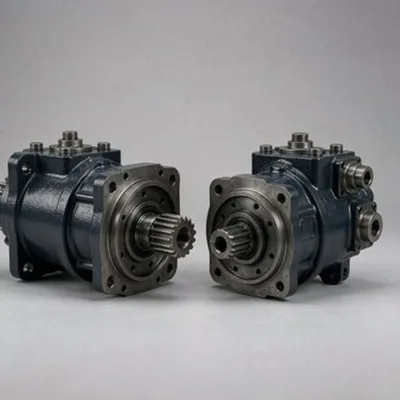
Connect a 400–600 bar test gauge to the pump outlet test port. A healthy axial-piston pump holds 95%+ volumetric efficiency; a worn unit drops below 85% and the relief valve opens early. If pressure is low but the engine is strong, the pump or its pressure-compensator is the fault. Rebuild or exchange the pump — do not just raise the relief setting, which masks the problem and overheats the oil.
4. Step 3 — Trace Contamination
Particles as small as 5 microns wedge valve spools and score cylinder bores. Inspect the JCB filter head (320/09256
) and all suction strainers; a collapsed element passes debris straight to the pump. Sample the oil: cloudy fluid means water ingress, shiny fluid means metal from a failing pump. Always flush the circuit and replace filters when contamination is found, or the new pump fails within weeks.
5. Step 4 — Check Cylinders and Seals
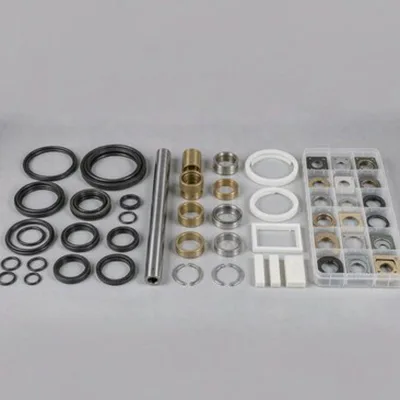
A single leaking rod seal can bleed several litres per hour and cut lift force by 10–15%. Extend the cylinder, hold it against a load, and watch for creep or external weep. Internal bypass shows as slow drift with no visible leak. Replace the seal kit; for scored rods or pitted bores, re-chrome or replace the tube.
6. Step 5 — Verify the Control and Relief Valves
Sticking spools cause jerky, one-sided movement. Pull the valve, inspect spools for scoring, and confirm the relief valve reseats. A relief valve held open by debris dumps pressure as heat — the classic “hot and weak” complaint. Clean or exchange the valve section; never shim the relief spring.
7. Preventive Maintenance to Avoid Recurrence
Once the fault is fixed, stop it returning. Sample hydraulic oil at every 2,000 hours and change filters at 1,000 hours or whenever contaminated; clean oil is far cheaper than a rebuild. Record the pump's baseline pressure when the machine is healthy so the next diagnosis is a 30-second comparison, not a teardown. Keep a spare seal kit and a known-good fuel filter head (320/09256
) on the shelf for the common failures above, and re-confirm engine calibration on Cat ECMs (331-7539
) after any flash. A short weekly walk-around—checking for weeps, foam, and unusual heat—catches most hydraulic faults before they strand the machine on a job site.
FAQ
Why is my hydraulic oil overheating?
Heat comes from pressure loss turned into thermal energy — a stuck relief valve, a bypassing pump, or aeration. Fix the leak path, not the thermometer.
Can I just raise the relief pressure?
No. Raising the setting hides a worn pump and cooks the oil, accelerating every seal in the circuit.
How often should I change hydraulic oil?
Sample at 2,000 hours; change filters every 1,000 hours or when contaminated. Clean oil is cheaper than a rebuild.
Conclusion
Hydraulic faults cascade: a small leak becomes a hot, weak, expensive failure. Isolate engine vs. pump vs. valve with the steps above, then order genuine components by part number. For a same-day quotation on any part in this guide — 387-9427, 10R-7225, 331-7539, 3928797, 320/09256, 1A013-03043, or the C9.3B overhaul kit — message our team on WhatsApp and we will confirm fitment and ship worldwide.