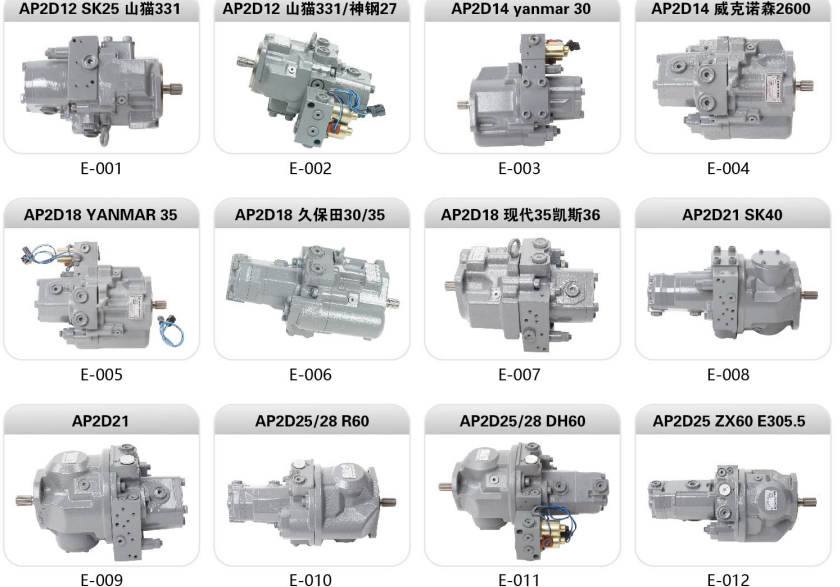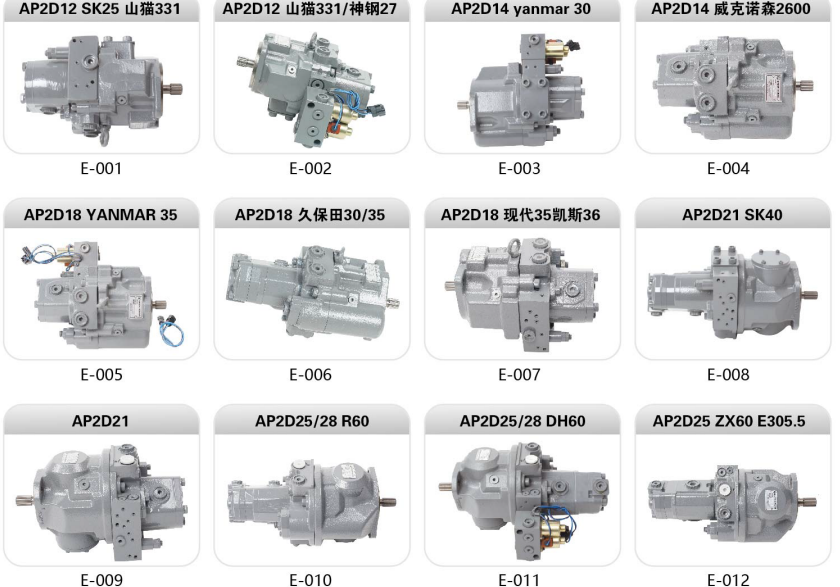
How to Choose a Hydraulic Pump Assembly for B2B Procurement
Selecting the right hydraulic pump assembly is critical for the performance, efficiency, and longevity of your heavy machinery. As a B2B buyer, you need to evaluate technical specifications, compatibility, quality standards, and supplier reliability. This guide provides clear decision criteria to help you make an informed choice.
1. Define Your Application Requirements
Start by understanding the specific needs of your equipment. Consider the following:
- Machine type: Excavators, loaders, dozers, or other heavy equipment have different hydraulic demands.
- Operating pressure and flow: Determine the required pressure (psi/bar) and flow rate (GPM/LPM) to match your system's specifications.
- Pump type: Choose between piston, vane, or gear pumps based on efficiency, noise, and pressure requirements.
- Mounting and shaft configuration: Ensure the pump's mounting flange, shaft size, and rotation direction are compatible with your engine or motor.
2. Verify OEM Compatibility and Interchangeability
For replacement or aftermarket assemblies, compatibility with original equipment manufacturer (OEM) parts is crucial. Check:
- OEM part numbers: Cross-reference the original part number to ensure a direct replacement.
- Brand compatibility: Confirm that the pump assembly is designed for your equipment brand (e.g., CAT, Komatsu, Volvo).
- Interchangeability: Some aftermarket pumps are engineered to be interchangeable with OEM units, but verify dimensions and performance specs.
3. Assess Quality and Manufacturing Standards
Quality directly impacts reliability and service life. Look for:
- Material quality: High-grade castings, hardened gears, and precision-ground pistons.
- Manufacturing processes: CNC machining, heat treatment, and strict tolerance control.
- Testing and certification: Ensure the pump is tested for pressure, flow, and leakage before shipment. ISO 9001 certification is a plus.
4. Compare Performance Specifications
When evaluating different options, compare these key parameters:
- Displacement: The volume of fluid pumped per revolution (cc/rev or in³/rev).
- Maximum pressure: The highest pressure the pump can handle continuously.
- Speed range: The allowable RPM range for optimal performance.
- Efficiency: Volumetric and overall efficiency affect fuel consumption and heat generation.
5. Evaluate Supplier Reliability and Support
Your supplier is a long-term partner. Consider:
- Experience: How long have they been manufacturing hydraulic pumps?
- Warranty: What warranty do they offer? A longer warranty indicates confidence in their product.
- Technical support: Do they provide installation guidance, troubleshooting, and after-sales service?
- Lead time and inventory: Can they meet your delivery deadlines and stock critical models?
6. Compare Total Cost of Ownership (TCO)
Don't just look at the purchase price. Calculate the total cost over the pump's lifetime:
- Initial cost: The price of the assembly.
- Maintenance and repair: Availability and cost of spare parts.
- Downtime: A reliable pump reduces unplanned downtime, saving money.
- Energy efficiency: A more efficient pump can lower fuel or electricity costs.
7. Request Samples or Technical Documentation
Before bulk ordering, ask for:
- Datasheets and drawings: Verify dimensions and performance curves.
- Sample testing: Test a single unit on your equipment to confirm fit and function.
- References: Ask for case studies or customer testimonials in your industry.
Comparison Checklist for Hydraulic Pump Assemblies
Use this checklist to compare different suppliers or models:
- ☐ Meets required pressure and flow specifications
- ☐ Compatible with OEM part number and machine brand
- ☐ High-quality materials and precision machining
- ☐ Tested and certified (e.g., ISO 9001)
- ☐ Competitive total cost of ownership
- ☐ Supplier offers warranty and technical support
- ☐ Reasonable lead time and reliable delivery
Frequently Asked Questions (FAQ)
Q1: How do I know if an aftermarket hydraulic pump assembly will fit my machine?
Check the OEM part number and compare it with the aftermarket pump's specifications. Most reputable manufacturers provide cross-reference charts. Also, verify the mounting dimensions, shaft size, and rotation direction. If unsure, request a sample or technical drawing before purchasing.
Q2: What is the difference between a piston, vane, and gear pump assembly?
Piston pumps offer high pressure and efficiency, ideal for heavy-duty applications. Vane pumps are quieter and have lower pressure capabilities, suitable for medium-duty. Gear pumps are simple, cost-effective, and reliable for low-pressure systems. Choose based on your machine's requirements.
Q3: How often should a hydraulic pump assembly be replaced?
There is no fixed interval; it depends on operating conditions, maintenance, and contamination levels. Signs of wear include reduced performance, unusual noise, or leaks. Regular oil analysis and pressure testing can help predict failure. Typically, a well-maintained pump can last thousands of hours.
Q4: What warranty should I expect from a hydraulic pump manufacturer?
Warranties vary, but a standard warranty is 12 months from the date of shipment or 2,000 hours of operation, whichever comes first. Some manufacturers offer extended warranties for an additional cost. Always read the warranty terms to understand coverage and exclusions.
For more information or to request a quote, contact us:
Hangzhou XC Machinery Co., Ltd.
Address: Juye Road, BinJiang District, HangZhou City, Zhejiang Province, China
Tel: +86 18758866446
WhatsApp: +86 18758866446
Email: robin@xcgparts.com