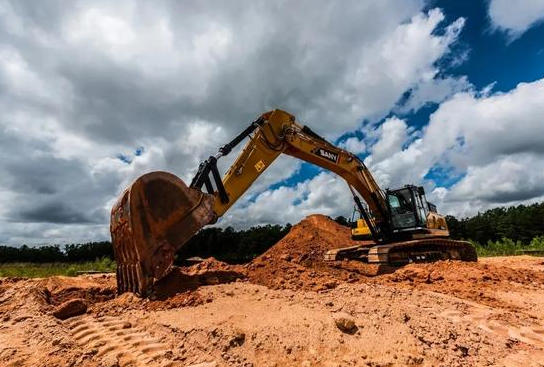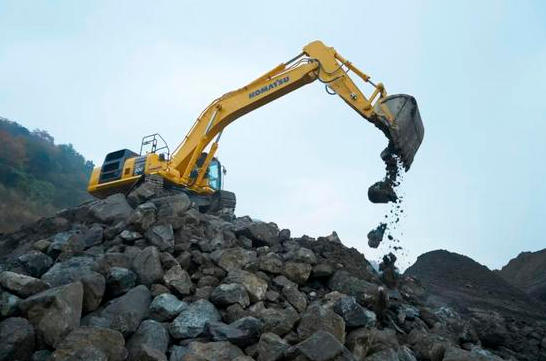
As the world's largest single market, the domestic construction machinery market has attracted the attention of all global industry leaders. Although the market has been sluggish in recent years due to various factors, its sheer scale remains significant. Despite the downturn, leading international giants and numerous domestic heavyweights continue to compete fiercely. Decades of rapid development in China's infrastructure have enabled domestic leaders such as XCMG, Zoomlion, and Sany to grow into world-class enterprises capable of competing head-on with global titans like Caterpillar and Komatsu. However, beneath this prosperity lie persistent challenges. In the highly competitive high-end hydraulic sector—the most critical segment of the industry—domestic brands still lack sufficient competitiveness, or in some cases, none at all.
Let us now examine the world's top ten hydraulic brands:
1. Bosch Rexroth: As an outstanding representative of Germany's Industry 4.0, Bosch Rexroth has earned global customer trust through comprehensive hydraulic solutions and excellent service quality. Its products hold leading positions in automation control, mobile applications, and industrial transmission.
2. Parker Hannifin: A century-old American company, Parker Hannifin has accumulated deep technical expertise in hydraulics, pneumatics, and fluid power transmission and control. Its extensive product line offers comprehensive solutions from basic components to complex systems.
3. Eaton: Eaton is renowned worldwide for its efficient hydraulic systems and filtration technologies, committed to providing innovative and sustainable energy solutions. Its products are found in aerospace, automotive, heavy trucks, and other sectors.
4. Kawasaki Heavy Industries: As a Japanese industrial giant, Kawasaki excels in both hydraulic technology and robotics. Its hydraulic products are widely used in construction machinery, injection molding machines, ships, and more.
5. Danfoss: This Danish company is known for its innovative technologies in refrigeration, heating, drive control, and hydraulics. Its hydraulic products are highly regarded for efficiency, energy conservation, and environmental friendliness.
6. Atos: An Italian manufacturer, Atos is a world-leading producer of hydraulic components and systems, specializing in high-performance solutions for industrial automation and mobile machinery.
7. Bucher Hydraulics: Based in Switzerland, Bucher is renowned for precise hydraulic systems and components, holding a significant position in agricultural and food processing machinery.
8. Yuken Industry: A Japanese leader in hydraulic control technology, Yuken's products are widely used in machine tools, injection molding machines, and construction machinery.
9. Sauer-Danfoss: As a subsidiary of Danfoss, Sauer-Danfoss specializes in mobile hydraulic systems, providing efficient power solutions for automotive, truck, and construction applications.
The top nine brands are all foreign. In recent years, Hengli Hydraulic, a rapidly developing domestic company, currently ranks tenth.
10. Hengli Hydraulics: As a leading Chinese hydraulic enterprise, Hengli has achieved remarkable success in technological innovation and market expansion. Its products are exported both domestically and internationally, making it a source of pride for Chinese hydraulic brands.
Despite Hengli's impressive achievements, there remains a significant gap in core and high-end hydraulic components. For instance, in the static pressure units of construction machinery CVT transmissions, there is currently only one global supplier—Bosch Rexroth. This illustrates the considerable distance we still need to cover.
One might recall the 2011 Great East Japan Earthquake. Although the quake struck Japan, for China's construction machinery industry, it starkly exposed the embarrassing shortage of core hydraulic components beneath the industry's prosperity—a sorrow caused by the lack of critical components.
Today, China is rising at an astonishing pace and has become a major player in global manufacturing. From excavators and loaders to cranes, Chinese-made construction machinery is found worldwide, demonstrating the strength of Chinese manufacturing. However, behind this glory lies an issue that cannot be ignored: the reliance on and deficiency in high-end hydraulic components. This is not only a headache for the industry but also a key bottleneck restricting its advancement to higher levels.
I. High-End Hydraulic Components: The "Heart" and "Soul" of Construction Machinery
Hydraulic components are core parts of construction machinery; their performance directly determines the operational efficiency, stability, and service life of the entire machine. In heavy equipment like excavators and loaders, the hydraulic system acts as the "heart" and "soul," handling power transmission and control execution. High-end hydraulic components, characterized by high precision, high reliability, and long service life, are crucial indicators of technological level.
However, for a long time, the Chinese construction machinery industry has been "dependent on others" in the high-end hydraulic sector. Imported components, especially from Germany and Japan, have dominated the market, favored by domestic manufacturers for their advanced technology and excellent quality.
II. The Tragedy of China's Construction Machinery: The Pain of Being "Held Back" by High-End Hydraulic Components
High technical barriers: High-end hydraulic components involve multiple disciplines such as materials science, precision manufacturing, and fluid dynamics, with extremely high technical requirements. Foreign enterprises have accumulated long-term expertise and made significant R&D investments, creating strong barriers that are difficult for domestic firms to overcome quickly.
Incomplete industrial chain: The research and production of high-end hydraulic components require a well-developed supply chain, including raw materials, precision processing, assembly, and testing. The domestic chain is still incomplete, leading to high production costs and unstable quality.
Market perception bias: Some domestic enterprises hold the notion of "emphasizing the mainframe while neglecting supporting components," resulting in insufficient investment in R&D for key components like hydraulics. This leads to low market recognition and difficulty in building brand influence.
Complex international trade environment: With increasing trade complexities, the import of high-end hydraulic components faces uncertainties, further highlighting the need for self-sufficiency.
Related News